
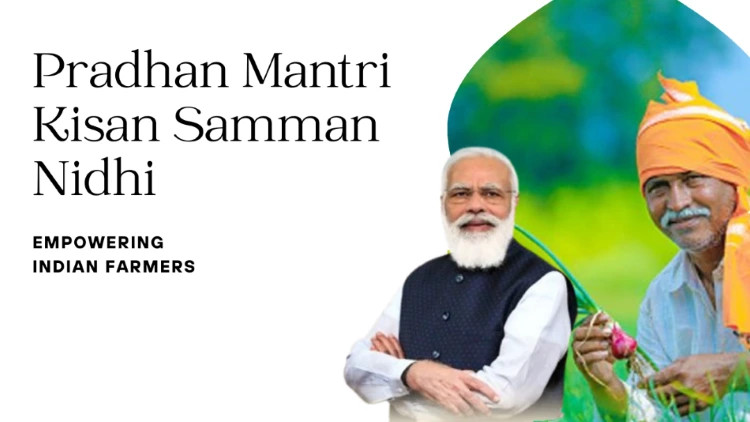
Pradhan Mantri Kisan Samman Nidhi
The Pradhan Mantri Kisan Samman Nidhi (PM-KISAN) is one of the most important schemes launched by the Government of India for the welfare of farmers. Introduced in February 2019, this Central Government Scheme provides direct income support to millions of landholding farmers across the country. The goal of PM-KISAN is to give financial relief to small and marginal farmers so they can manage their agricultural and household needs.
Under this scheme, eligible farmer families receive Rs. 6,000 per year, paid in three equal installments of Rs. 2,000 each. The amount is deposited directly into the farmer's Aadhaar-linked bank account through the Direct Benefit Transfer (DBT) system. This reduces middlemen, increases transparency, and ensures farmers receive the full benefit without any delay or corruption.
It explains everything about PM-KISAN in a simple tone, including its objectives, features, eligibility, exclusions, required documents, registration process, and how the scheme is implemented across the country.
What is PM-KISAN?
PM-KISAN stands for Pradhan Mantri Kisan Samman Nidhi, a Central Government income support scheme designed exclusively for farmer families who own cultivable land. The main idea behind the scheme is to offer timely financial help so that farmers can purchase essential farming inputs like seeds, fertilizers, machinery repairs, and other basic requirements needed for crop production.
The financial assistance of Rs. 6,000 per year might seem modest, but it provides crucial support for farmers during different crop cycles. The amount also helps them handle small household expenses, especially during times when farming income is unstable. Since the money reaches directly into bank accounts, farmers receive the benefit without any middle agency or local interference.
Objectives of the PM-KISAN Scheme
The PM-KISAN scheme was launched with a clear purpose to strengthen the financial condition of small and marginal farmers. Some of the major objectives include:
- Supporting the Income of Farmers: Many farmers face unpredictable incomes because agriculture depends heavily on weather, input prices, and market conditions. PM-KISAN offers a stable amount of Rs. 6,000 annually to help reduce this uncertainty.
- Helping Farmers Buy Inputs: The amount allows farmers to purchase seeds, fertilizers, pesticides, and other items that directly affect crop quality and health.
- Reducing Dependence on Informal Loans: In rural areas, many farmers borrow from local moneylenders at high interest rates. PM-KISAN helps reduce this dependency by giving them a basic financial cushion.
- Encouraging Continued Farming Activities: With assured financial support, farmers can continue farming without fear of financial instability. It helps create confidence in handling agricultural activities.
Key Features of PM-KISAN
PM-KISAN comes with several features that make it one of the most impactful farmer welfare schemes. Below are the key highlights:
| Feature | Details |
|---|---|
| Annual Benefit | Rs. 6,000 per farmer family |
| Payment Mode | Direct Benefit Transfer (DBT) |
| Installments | Three payments of Rs. 2,000 each |
| Payment Frequency | Once every four months |
| Funding Source | 100% funded by the Government of India |
| Beneficiary Type | Landholding farmer families |
These features make the scheme simple yet powerful. The direct transfer system ensures timely and transparent payments to all eligible families.
Eligibility Criteria for PM-KISAN
To receive benefits under PM-KISAN, farmers must meet certain eligibility requirements. The basic eligibility criteria include:
- Being a Landholding Farmer Family: The scheme defines a farmer family as a husband, wife, and minor children who own cultivable land registered in the State or Union Territory land records.
- Valid Land Records: The land must be officially registered and verified by the state authorities. Only then can the farmer family be considered eligible.
- Aadhaar Linking: Aadhaar is compulsory for the PM-KISAN scheme. It must be linked with both the land records and the bank account.
- e-KYC Completion: Farmers must complete their e-KYC to continue receiving installments. Without e-KYC, payments are stopped until the verification is completed.
Documents Required for PM-KISAN
To register for PM-KISAN, farmers need to provide some basic documents. The information must be correct to avoid rejection or delays. The required documents include:
- Aadhaar Card
- Aadhaar-linked mobile number
- Bank account details (Account Number and IFSC)
- Land ownership documents/land records
- Residence details
- Passport-size photograph (where required)
- e-KYC verification
How PM-KISAN is Implemented Across India
PM-KISAN follows a smooth and transparent digital process to identify beneficiaries and transfer money. The Government uses technology to avoid errors and ensure the scheme reaches the right families. The steps involved are:
Step 1: Identification of Beneficiaries
The State or UT government uses land records to identify eligible farmer families.
Step 2: Data Upload
State officials upload farmer details to the PM-KISAN portal after verifying the land ownership.
Step 3: Verification
The details of Aadhaar, bank account, and land records are checked digitally.
Step 4: Fund Transfer
Once verification is completed, the government transfers the funds directly to the farmer's Aadhaar-linked bank account.
What If a Farmer’s Name is Missing?
Sometimes, eligible farmers may not appear in the beneficiary list. In such cases, they can:
- Approach the District Level Grievance Redressal Committee
- Register manually at local government offices
- Apply online through the PM-KISAN portal
The government has kept multiple options open to ensure no eligible farmer is left out.
How to Register for PM-KISAN
Farmers can register for PM-KISAN in two ways - online and offline.
How to Register Offline
Farmers who prefer offline registration can visit:
- Local revenue offices
- Block agriculture offices
- Common Service Centres (CSCs)
They need to submit their documents to the officer, who will enter the details in the PM-KISAN system. After verification, the installment will start reflecting in their bank accounts.
How to Register Online
Online registration is simple and can be done through the official website.
Step-by-Step Guide:
- Visit the official PM-KISAN portal: pmkisan.gov.in
- Go to the Farmer’s Corner section
- Click on New Farmer Registration
- Enter your Aadhaar number
- Verify your land details
- Complete the required e-KYC
- Submit the form and wait for approval
Once the state authority approves, the farmer starts receiving the benefit from the next cycle.
Importance of e-KYC
e-KYC is mandatory for all beneficiaries. Without e-KYC, payments are stopped. Farmers can complete e-KYC in two ways:
- Online OTP-Based e-KYC: Farmers can enter their Aadhaar number and authenticate using an OTP sent to their registered mobile number.
- Offline KYC at CSC: Farmers without an Aadhaar-linked mobile number can visit CSCs for biometric-based e-KYC. Regular updates of bank details and land records are also important for uninterrupted payments.
Who is Excluded from PM-KISAN?
While the scheme supports farmers widely, certain categories are excluded to ensure that benefits reach the right people. The following groups are not eligible:
Institutional Landholders
Any land owned by institutions is automatically excluded.
High-Income Families
Farmer families belonging to any of the following groups cannot receive the benefit:
- Current or former holders of constitutional posts
- Present or former Ministers, MPs, MLAs, MLCs, Mayors, or District Panchayat Chairpersons
- Serving or retired officers and employees of Central and State Governments, Public Sector Enterprises, Autonomous Bodies (except Class IV, Group D, or MTS employees)
- Pensioners receiving Rs. 10,000 or more per month
- Individuals who paid Income Tax in the previous assessment year
- Professionals registered with professional bodies such as doctors, lawyers, engineers, chartered accountants, and architects
These rules ensure the scheme is reserved only for small and marginal farmers who genuinely need the support.
Why PM-KISAN is Important for Farmers
PM-KISAN plays a big role in supporting the agricultural sector in India. Here’s why the scheme is important:
- Regular Financial Support: Farmers get an assured amount every year, which helps them manage expenses related to farming and household needs.
- Encourages Better Crop Practices: With financial support available, farmers can afford better seeds, fertilizers, and other inputs for healthier crops.
- Minimizes Financial Stress: The extra income reduces pressure on farmers during off-season periods.
- Reduces Loan Dependency: Farmers are less likely to borrow money at high interest rates, improving their long-term financial stability.
- Boosts Rural Economy: When money is directly transferred to farmers, it boosts spending in rural areas and supports local markets.
PM-KISAN Installment Schedule
The annual amount of Rs. 6,000 is divided into three equal installments. These are released every four months:
- April – July : 1st Installment
- August – November: 2nd Installment
- December – March: 3rd Installment
Farmers receive SMS alerts once the money is credited.
Bottom Line
Pradhan Mantri Kisan Samman Nidhi (PM-KISAN) is one of the most successful and farmer-friendly initiatives in India. It provides essential income support, promotes financial stability, reduces dependency on informal credit, and helps farmers maintain their agricultural activities without stress. With simple eligibility rules, easy registration, and transparent fund transfer, PM-KISAN continues to support millions of farmers each year. The scheme not only strengthens individual farmer families but also contributes greatly to India's agricultural growth and rural economy.
- Who can get PM-KISAN benefits?
The scheme is available to all landholding farmer families, regardless of whether they own small or large amounts of land. Both small and big landowners are eligible to receive support.
- Does the land need to be in the farmer’s name?
Yes, the land must be officially registered in the farmer’s name. If the land is inherited and transferred to the farmer, it also counts. Tenant farmers who do not own the land themselves are not eligible.
- Can urban farmers get the benefit?
Yes, farmers living in towns or cities can also receive the benefit, as long as the land is actively used for cultivation. There is no difference between urban or rural land in terms of eligibility.
- How is the benefit paid and how often?
Each eligible farmer family receives a total of Rs. 6,000 per year. This amount is split into three equal payments of Rs. 2,000, which are released every four months. The money is deposited directly into the farmer’s bank account through the Direct Benefit Transfer (DBT) system.
- What if a family owns land in multiple places?
Even if a family owns land in different villages, districts, or states, the benefit will be provided only once. This ensures no duplicate payments are made.
- Are very small or uncultivable plots eligible?
No, tiny land plots that cannot be farmed are not included in the scheme. Only cultivable land is eligible.
- Can land used for non-farming purposes receive benefits?
No, the land must be used for agriculture. If it is used for housing, commercial, or other non-farming purposes, it is not eligible.
- Is e-KYC mandatory to receive payments?
Yes, completing e-KYC linked to Aadhaar is compulsory for all beneficiaries. Without e-KYC verification, payments will not be processed. Farmers can complete it online using an OTP or offline through Common Service Centres (CSCs).
- Will a family receive benefits for each land parcel separately?
No, even if a family owns multiple land parcels, they will receive the benefit only once to prevent duplicate payments.
- How do farmers get updates about payments?
Farmers receive SMS alerts or notifications on their registered mobile numbers whenever a payment is credited or when there is an update about the scheme. This helps them stay informed and ensures transparency.