
RBL Bank Credit Card Offers October 2026: Best Festive Discounts & Deals

RBL Bank Credit Cards offer great festive discounts in October 2026 on flight tickets, online shopping, electronics, dining and home essentials. RBL Bank has introduced its A Season of Great Deals campaign with offers from popular brands such as MakeMyTrip, IndiGo, Flipkart, Amazon, Samsung, LG, Lenovo, Blinkit and Swiggy. Eligible cardholders can enjoy instant discounts, cashback and low-cost EMI benefits.
Don’t Swipe Blindly! 7 Credit Card Tips Everyone Should Know

A credit card is a simple payment tool, but it also works like a short-term loan from the bank. When you swipe your credit card the bank pays the money for you. Later you repay that money to the bank. If you pay your bill on time, no interest will be charged. If you delay the payment the bank may charge high interest and penalties.
How to Apply for an Instant Online Loan from Home in India?

Need money urgently but do not have time to visit a bank? An instant online loan can be a simple and fast solution. Today you can apply for an online personal loan from your home using your smartphone or laptop. The entire process is digital which means you do not have to stand in long queues or complete lengthy paperwork.
7 Best RuPay UPI Credit Cards in 2026 for Everyday Payments
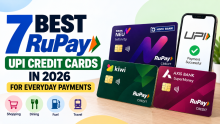
RuPay credit cards for UPI are becoming a useful option for everyday payments in India. You can link an eligible RuPay credit card with a supported UPI app and pay at shops by simply scanning the merchant QR code.
The amount is added to your credit card bill instead of being deducted directly from your bank account. You may also earn cashback, Reward Points, NeuCoins or CashPoints on eligible transactions.
How To Use a Personal Loan for Your Next Vacation

Last year, Riya, a software engineer from Pune, had always dreamed of visiting Bali. She had planned every detail, the beaches, local food, and sightseeing spots. But when she added up the total cost, it felt impossible. Her savings were not enough, and she didn’t want to delay the trip. After some research, she discovered that a personal loan for travel could help. Within a few days, she applied online, got the money in her account, and finally went on her dream vacation.
Why You Were Rejected for a Credit Card and How to Fix It

Ever applied for a credit card and received the disappointing “application denied” message? You are not alone. Many people face this, and it can be frustrating, especially when you are trying to build or improve your financial life. The good news is that being rejected is not the end. It just means you need to understand what went wrong and how to fix it.
Let’s look at the common reasons for credit card rejection and what you can do to increase your chances next time.
UPI vs Debit vs Credit Cards: Which Payment Method Is Cheapest After MDR Charges?
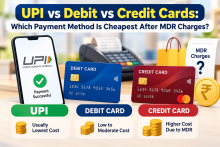
UPI has become a normal part of daily life in India. We use it at grocery stores. We use it for food delivery. We also use it for shopping and paying bills. A simple QR scan can complete a payment within seconds.
But a new UPI MDR rule is bringing an important question. Will UPI still be cheaper than debit cards and credit cards after MDR charges?
SimplyCLICK SBI Card: 10X Rewards, Benefits, Fees and Milestone Rewards

The SimplyCLICK SBI Card is an online-focused credit card from SBI Card designed for customers who regularly spend on shopping, travel, food, entertainment and other digital services. The card offers 5X Reward Points on eligible online spends and 10X Reward Points on online transactions with exclusive partner merchants. It also provides milestone e-vouchers on reaching ₹1 lakh and ₹2 lakh in annual online spending.
BOB Eterna Credit Card: Premium Travel & Lifestyle Credit Card with Lifetime Free Offer

The BOB Eterna Credit Card is one of the best premium credit cards offered by Bank of Baroda. It is specially designed for people who travel frequently, dine out often, shop online, and want premium lifestyle benefits. The card comes with attractive travel privileges, accelerated reward points, airport lounge access, entertainment offers, and valuable savings on everyday spending.
UPI for Business: Tips to Maximize Efficiency and Security
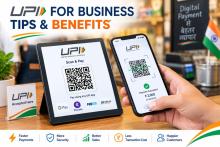
UPI has changed the way businesses in India handle payments. It allows instant transfers using mobile devices and is very simple to use. Today, it is not only useful for individuals but also for small and large businesses. UPI helps companies receive money quickly, reduces errors, and improves overall efficiency.
Understanding the Basics of Travel Credit Cards: Key Features and Benefits

Travel credit cards are special cards that let you earn rewards when you spend money. You can use these rewards for flights, hotel stays, rental cars, and other travel expenses. Some travel cards also offer extra benefits such as airport lounge access, travel insurance, and priority boarding. They are designed to make your trips more enjoyable and save you money while traveling.
What happens if you only pay the minimum on your credit card?

Credit cards have become a very common part of financial life in India. They make it easy to spend now and pay later. They give you the benefit of interest free periods and rewards on spending. But they also come with some conditions. One of the most important is how much you choose to pay when the bill arrives.
Flipkart Axis Bank Credit Card: 7.5% Cashback, Fees & Benefits

The Flipkart Axis Bank Credit Card is a cashback credit card designed for people who regularly shop on Flipkart and Myntra. It also offers cashback on Cleartrip and selected preferred merchants.
The card currently offers 7.5% cashback on eligible Myntra spends, 5% cashback on Flipkart and Cleartrip, 4% cashback on eligible preferred merchants, and 1% cashback on other eligible categories. Cashback is credited directly to the credit-card statement, subject to applicable terms and limits.
The Comfort of Airport Lounges with Priority Pass

Air travel has become a common part of life for many people in India. Whether it’s a business trip, a family vacation, or visiting relatives, flying is often the fastest way to reach our destination. But while flying saves time, the waiting before the flight can be long and tiring. Anyone who has spent hours sitting on an airport bench knows how uncomfortable it can be. The noise, the crowd, and the rush can make the experience stressful before you even board the plane.
Virtual Credit Cards: The Future of Secure Digital Payments
A few years ago, Riya, a college student, bought her first laptop online. She used her regular credit card, entered the details, and completed the payment. A week later, she got a message that her card was used for an unknown purchase. She panicked and blocked her card immediately. Today, Riya doesn’t worry about such things. Whenever she shops online, she uses a virtual credit card. Even if someone gets her payment details, the card becomes useless after one transaction.