
What Is a UTR Number in India? Example, Format & Tracking Guide
Have you ever sent money through UPI or bank transfer and then wondered whether the payment was successful? Maybe the amount was deducted from your account but the receiver did not get it immediately. In such situations, the UTR number becomes very important.
A UTR Number helps you track your transaction and verify where your money is. Whether you transfer money through UPI, NEFT, RTGS, or IMPS, every transaction gets a unique UTR number.
Many people ignore this number until they face a payment issue. However, understanding the UTR number can save you time and help resolve transaction problems quickly.
What is a UTR Number?
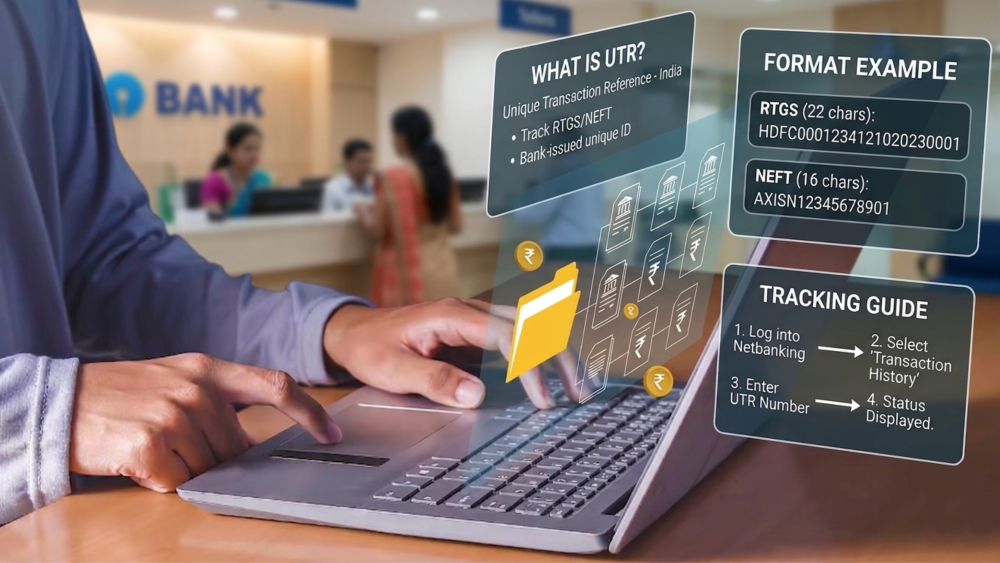
UTR stands for Unique Transaction Reference Number. It is a unique code generated automatically whenever you make a digital payment through a bank or UPI application. This number acts like a tracking ID for your money transfer.
Every transaction receives a different UTR number. Each transaction gets its own unique UTR number, so the same UTR cannot be used for another transaction. Banks use this number to identify and track transactions across the banking system. If there is any issue with a payment, the UTR number helps banks locate the transaction quickly.
Simply put, a UTR number is like a courier tracking number. Just as you track a package using a tracking ID, you can track a payment using a UTR number.
Why Should You Care About Your UTR Number?
Most people only notice a UTR number when a payment gets stuck. Imagine that you sent ₹10,000 to a friend through UPI. The money was deducted from your account but your friend did not receive it. Instead of explaining the entire transaction to customer support, you can simply provide the UTR number.
The bank can immediately trace the payment and check its status. This is why every digital payment user should know where to find their UTR number.
Real-Life Example of a UTR Number
Suppose Rahul from Delhi transfers ₹5,000 to his brother through UPI.
The money is deducted instantly. However, due to a temporary banking issue, the receiver does not get the amount.
Rahul opens his UPI app and finds the transaction details. There he sees a UTR number such as: AXIS12345678
He sends the UTR number to the support team. The bank uses it to track the payment and confirms that the transaction is still being processed.
Without the UTR number, finding the transaction would take much longer.
UTR Number Examples
The format of a UTR number depends on the type of transaction.
| Transaction Type | Example UTR Number |
|---|---|
| NEFT | HDFCN230710123456 |
| RTGS | ICICRC2024030587654321 |
| UPI | AXIS12345678 |
| IMPS | IMPS20240315456789 |
Although the format may differ, the purpose remains the same. Every UTR number uniquely identifies a transaction.
Understanding UTR Number Formats
Different banking systems generate different UTR formats.
| Payment Method | Typical Length | Purpose |
|---|---|---|
| UPI | 12 to 16 characters | Instant payment tracking |
| NEFT | Around 16 characters | Bank transfer tracking |
| RTGS | Around 22 characters | High-value transfer tracking |
| IMPS | Varies by bank | Instant bank transfer tracking |
There's no need to remember these formats. The important thing is knowing where to find the UTR number when needed.
How Does a UTR Number Work?
Whenever you make a digital payment, several systems work together behind the scenes.
First, you authorize the transaction. Then the bank generates a unique UTR number.
The payment request is sent through the banking network. The receiving bank processes the request. Finally, the payment status is updated.
Throughout this process, the UTR number remains attached to the transaction. This helps banks track the payment from start to finish.
Why UTR Numbers Make Digital Payments Safer
India processes millions of digital transactions every day. Without a unique reference system, it would be extremely difficult to identify specific transactions.
The UTR number improves security because every payment has its own unique identity. Banks can quickly verify transaction details and reduce confusion.
This creates greater transparency and trust in digital banking. Whether you are sending ₹100 or ₹10 lakh, the UTR number helps maintain a reliable record of the transaction.
When is a UTR Number Generated?
A UTR number is generated almost instantly after you approve a transaction.
For example:
- You enter your UPI PIN.
- The payment request is accepted.
- The banking system generates a UTR number.
- The payment moves to the beneficiary bank.
- The final transaction status is updated.
- This process usually happens within seconds.
- That is why most UPI apps show the UTR number shortly after the transaction is initiated.
Why Some UPI Apps Show UTR Numbers Late
Sometimes users become worried because they cannot see the UTR number immediately.
This usually happens because:
- The transaction is still being processed.
- The app displays the UTR only in transaction details.
- There is a temporary delay between banks.
- The application has not refreshed transaction records.
In most cases, the UTR number appears automatically after a few minutes.
How to Find Your UTR Number
Finding a UTR number is very easy.
Through Your UPI App
- Open your UPI application.
- Go to transaction history.
- Select the transaction.
- Open transaction details.
- You will see the UTR number.
Through Internet Banking
- Log in to your net banking account.
- Open transaction history.
- Select the payment.
- View complete transaction details.
- The UTR number will be displayed.
Through Mobile Banking
- Open your bank's mobile app.
- Navigate to transaction history.
- Tap on the transaction.
- Check the details section.
Through SMS and Email
- Most banks send transaction alerts through SMS and email.
- The UTR number is often included in these messages.
Through Bank Statements
- Both online and printed bank statements usually show the UTR number against each transaction.
How to Track a UTR Number Online
Tracking a UTR number helps you know the exact status of your payment. First, log in to your banking portal or mobile app. Next, locate the transaction. Open transaction details and check the status.
The following statuses may appear:
- Successful
- Pending
- Failed
- Returned
If the transaction remains pending for a long time, contact your bank and provide the UTR number. The support team can investigate the issue quickly.
How UTR Numbers Help During Payment Problems
- Payment issues can happen to anyone.
- Sometimes money gets debited but is not credited to the receiver immediately.
- Sometimes the receiver receives the amount after several hours.
- Sometimes a transaction fails completely.
- In all these situations, the UTR number becomes the most important piece of information.
- Banks use it to trace the payment path and identify exactly where the transaction is stuck.
- This is why customer support usually asks for the UTR number first.
UTR Number vs Transaction ID
Many people think that a UTR number and transaction ID are the same thing. They are actually different. A transaction ID is generated by the app or payment platform. A UTR number is generated by the banking system and is used across banks for official tracking.
If there is any payment issue, banks usually ask for the UTR number because it helps them easily find and track the transaction across the banking system.
Uses of a UTR Number
A UTR number is useful in many situations.
- It helps verify payments.
- It acts as proof of transaction.
- It helps businesses match incoming payments.
- It supports accounting and auditing.
- It helps resolve disputes.
- It assists in tax-related payment verification.
- It improves payment transparency.
For businesses, freelancers, and salaried individuals, maintaining transaction records with UTR numbers can be very helpful.
Bottom Line
A UTR Number is one of the most important parts of digital banking in India. It helps you check payments, confirm transactions, solve payment-related issues, and keep your financial records correct and organized.
Whether you use UPI, NEFT, RTGS, or IMPS, every transaction generates a unique UTR number that acts as a tracking reference for your money.
The next time you make a digital payment, do not ignore the UTR number. Save it until the transaction is completed successfully. It can help you quickly track payments, resolve issues, and stay confident while using digital banking services.
Understanding your UTR number is a small step that can make managing your online transactions much easier and safer.



Leave a Reply