
What Is Credit Card Settlement Process in India?
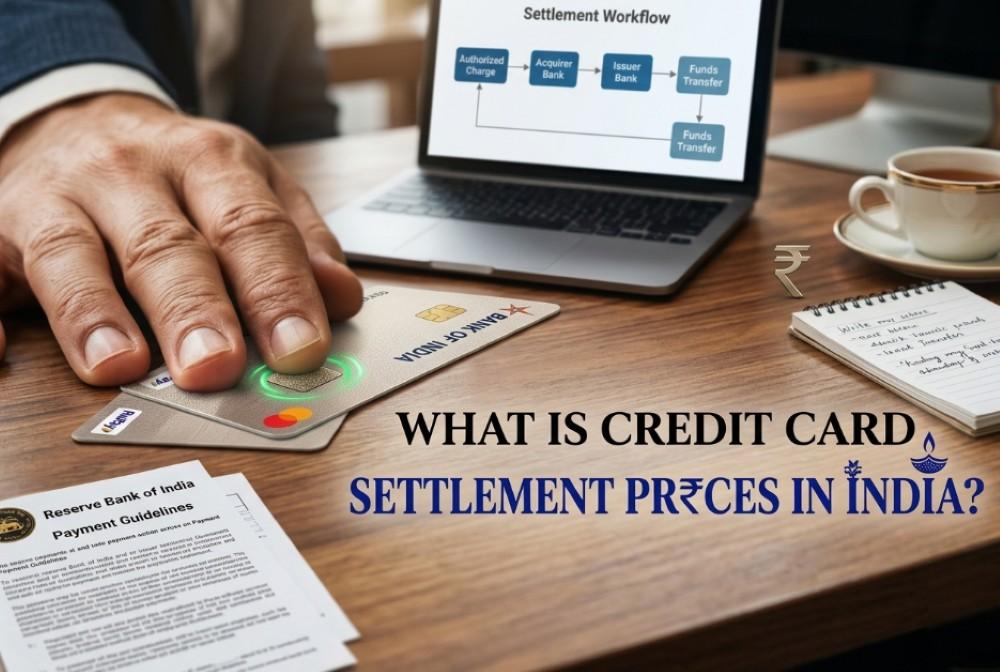
Credit cards are now used by millions of people in India. People use them for shopping online payments, travel bookings, food delivery, electricity bills and emergency expenses. A credit card helps you buy things now and pay later. Because of this many people depend on credit cards for daily spending.
Banks also offer cashback rewards discounts and EMI options on credit cards. These benefits make credit cards very popular among salaried employees, students, business owners and young professionals.
But problems begin when people spend more money than they can repay. Sometimes people forget to track their expenses. In other situations, financial problems like job loss, medical emergencies, salary cuts or business losses make repayment difficult. When credit card bills are not paid on time banks start adding interest charges late fees and penalties every month.
Slowly the outstanding amount becomes very large. Many people then feel stressed because they are unable to manage repayments. In such situations banks may offer something called credit card settlement.
What Is Credit Card Settlement?
Credit card settlement means the bank agrees to accept a smaller amount instead of the full pending dues.
For example, if your total credit card bill becomes ₹1 lakh the bank may agree to settle the account for ₹60,000 or ₹70,000 depending on your financial condition.
This option is usually given to people who are facing serious financial problems and cannot repay the complete amount.
After paying the agreed settlement amount the account gets closed. But the bank marks the account as “settled” and not “fully paid” in the credit report.
This difference is important because settlement can affect your future loan approvals and credit score.
Why Do People Choose Settlement?
Many people choose settlement because they are unable to handle growing credit card debt.
Credit card interest rates in India are very high. If payments are delayed for many months the outstanding amount increases quickly because of interest and penalties.
Some common reasons why people choose settlement include:
| Reason | Example |
|---|---|
| Job Loss | Monthly salary stops |
| Medical Emergency | Hospital expenses increase |
| Business Loss | Income becomes low |
| Salary Cut | Monthly income decreases |
| Multiple Credit Cards | Too many bills together |
For many borrowers, settlement feels like a quick solution because they can close the account by paying a smaller amount.
How Does Credit Card Settlement Work?
The settlement process usually starts after several missed payments. In the beginning the bank sends reminder messages emails and phone calls asking the customer to pay pending dues.
If payments are still not made the recovery department starts contacting the borrower regularly. At this stage the customer can contact the bank and explain the financial condition honestly. Banks may ask for documents like:
| Required Document | Purpose |
|---|---|
| Salary Slip | To check income |
| Bank Statement | To review finances |
| Medical Papers | To verify emergency |
| Job Loss Proof | To confirm unemployment |
After checking the documents, the bank may offer a reduced settlement amount. If both sides agree the borrower has to pay the amount within a fixed time period. Once payment is completed the borrower should collect the settlement letter and no dues certificate from the bank.
Simple Real-Life Example
Rahul from Mumbai works in a private company. He uses his credit card for shopping travel and online payments. Over time his total credit card bill becomes ₹1,20,000.
Later Rahul loses his job and cannot repay the amount for several months. Due to interest and penalty charges, the total amount becomes ₹1,50,000.
The bank keeps calling Rahul for repayment. Since Rahul is facing financial problems, he talks to the bank and requests settlement. After discussion the bank agrees to settle the account for ₹90,000.
Rahul arranges money from family savings and pays the amount. The account gets closed but the credit report shows the account as “settled.” Later Rahul faces difficulty while applying for a personal loan because his credit score becomes lower.
Impact on Credit Score
This is one of the biggest disadvantages of credit card settlement. When you settle a credit card the bank reports it to credit bureaus like CIBIL as a settled account This means the borrower did not repay the full amount.
Because of this your credit score may go down. A lower credit score can create problems while applying for:
| Financial Product | Possible Problem |
|---|---|
| Personal Loan | Loan rejection |
| Home Loan | Higher interest rate |
| Credit Card | Approval difficulty |
| Car Loan | Lower loan amount |
A settlement record can stay in your credit report for many years. Because of this, banks may consider you a risky borrower in the future.
Read: The Power of Good Credit: 10 Benefits of a High Credit Score
Difference Between Settlement and Full Payment
Many people think settlement and full repayment are the same but they are different. In full payment the borrower repays the complete outstanding amount including interest charges and penalties.
The account is marked as “fully paid” which improves the credit profile. In settlement only part of the dues is paid. The account is marked as “settled” which negatively affects the credit score.
| Full Payment | Settlement |
|---|---|
| Full dues paid | Partial dues paid |
| Better credit score | Lower credit score |
| Easy future loan approval | Difficult future approval |
| Positive financial record | Negative financial record |
Full repayment is always better whenever possible.
Things to Check Before Settlement
Before accepting any settlement offer you should understand all terms properly. Always ask the bank for written confirmation of the settlement amount and payment deadline.
Never depend only on phone conversations. You should also ask how settlement will affect your credit report.
| Important Check | Why It Matters |
|---|---|
| Final Amount | Avoid confusion |
| Written Agreement | Acts as proof |
| Payment Date | Prevents penalties |
| No Dues Certificate | Confirms account closure |
After payment always collect the settlement letter and no dues certificate safely.
Can Settlement Be Avoided?
Yes, in many situations settlement can be avoided. If you are facing temporary financial problems, contact the bank early instead of ignoring calls and messages. Many banks in India offer options like:
| Alternative Option | Benefit |
|---|---|
| EMI Conversion | Smaller monthly payments |
| Loan Restructuring | Flexible repayment |
| Balance Transfer | Lower interest rate |
| Temporary Relief | Short term support |
These options may help you manage repayment without damaging your credit score badly.
Read: What is a Balance Transfer Credit Card?
Tips to Use Credit Cards Safely
- Using a credit card carefully can help you avoid debt problems in the future.
- Always spend only what you can comfortably repay every month.
- Avoid unnecessary shopping and luxury spending using credit cards.
Here are some simple tips:
| Smart Tip | Benefit |
|---|---|
| Pay bills on time | Avoid late fees |
| Track spending | Better money control |
| Avoid minimum due trap | Reduce debt burden |
| Keep emergency savings | Handle financial problems |
| Use lower limit | Prevent overspending |
Good financial habits help maintain a healthy credit score and strong financial future.
Bottom Line
Credit card settlement in India can help people who are facing serious financial problems and cannot repay large dues. It reduces immediate repayment pressure and helps borrowers close pending debt with a smaller payment amount.
However, settlement also lowers your credit score and affects future loan approvals and credit card eligibility. Because of this settlement should always be treated as the last option.
Whenever possible try full repayment EMI options budgeting or direct discussion with the bank first. Responsible spending timely bill payments and proper financial planning are always the best ways to avoid credit card debt problems and maintain financial stability in the future.



Leave a Reply